


Tensile testing

Tensile tests represent one of the main analytical methodologies used to evaluate the behavior of materials under mechanical stress. A static tensile test consists of applying an increasing load on a specimen until it deforms or breaks in order to determine fundamental properties such as tensile strength, yield strength and elongation.
This type of mechanical tensile testing is essential in many industries to ensure the reliability and safety of structural components. In fact, tensile tests are used to verify that materials meet specific regulatory and performance requirements, thus contributing to the validation of manufacturing processes and the selection of the most suitable materials.
Static tensile test: the tests performed
Static tensile tests are conducted as part of mechanical testing and in particular static tests, to determine the fundamental mechanical properties of metallic and polymeric materials, using universal testing machines that apply a controlled load until the specimen breaks.
Tensile tests can be performed at room temperature, high temperature, and low temperature. Depending on the temperature and the material to be tested in TEC Eurolab, customized tensile tests are designed, following the relevant standards:
- UNI EN ISO 6892-1 and ASTM E8/E8M for tensile tests at room temperature on metallic materials
- UNI EN ISO 6892-2 and ASTM E21 for high temperature tensile tests on metallic materials
- UNI EN ISO 527-1/2/3 and ASTM D638 for tensile tests on plastic materials
- ISO 37, ASTM D412 and DIN 53504 for tensile tests on elastomers and vulcanized rubber
- UNI EN ISO 527-4/5 and ASTM D3039/D3039M for tensile tests on composites
- ASTM C297/C297M and AMS-STD-401 for plate tensile tests – sandwich construction
Mechanical tensile test: the procedure
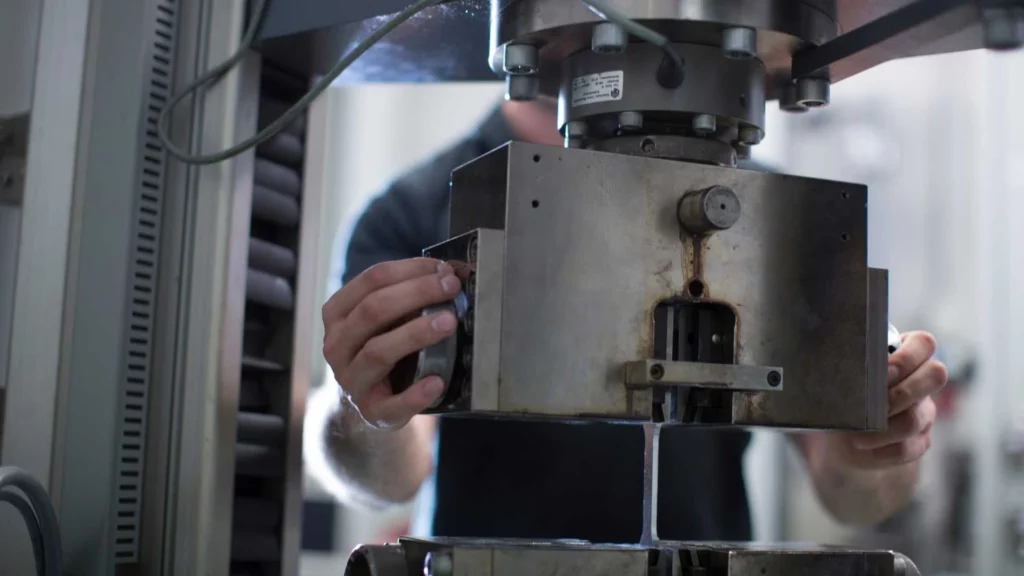
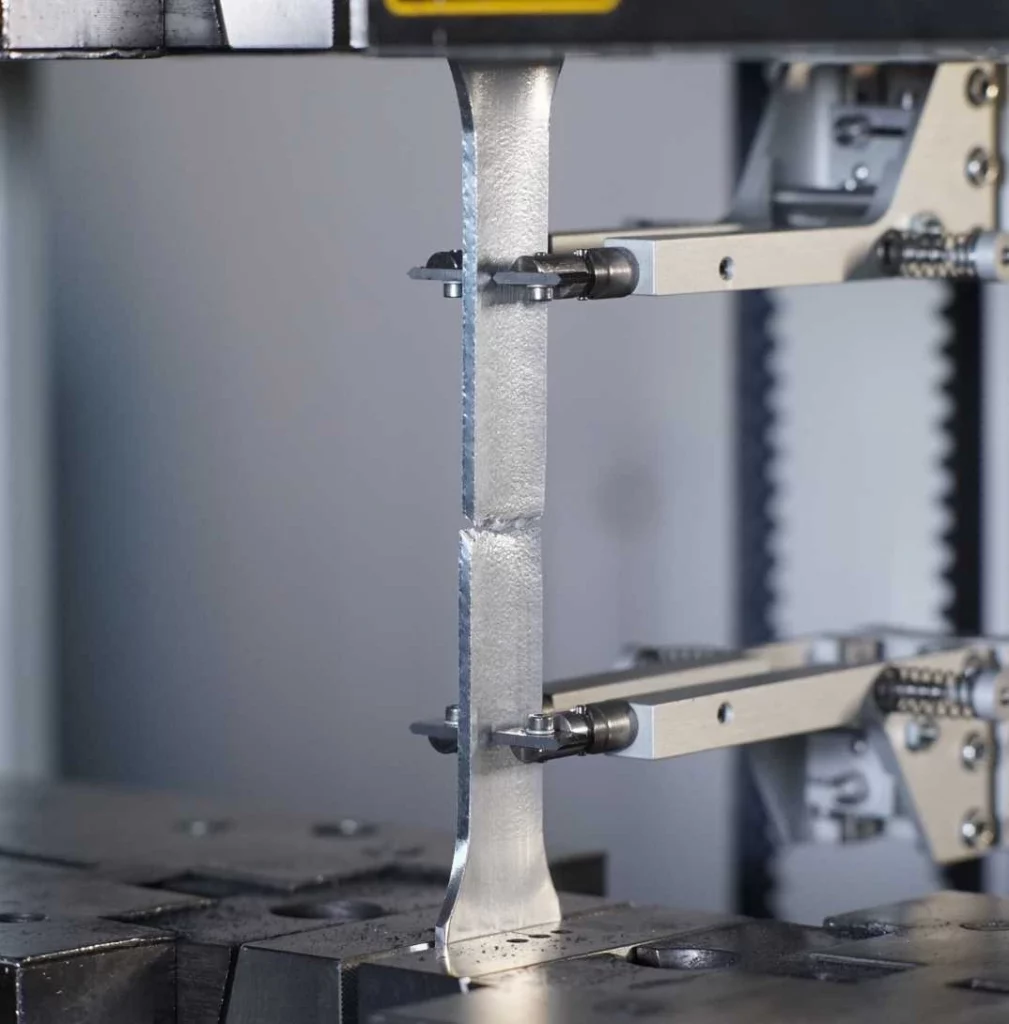
Specific procedures for tensile testing are followed at TEC Eurolab to ensure proper execution according to standard and the reliability and repeatability of the test. Depending on the standard to be followed, the test can be performed on a single specimen, on 2 or 3 specimens, going on to measure fundamental values such as yield strength, maximum tensile strength, modulus of elasticity, Poisson’s coefficient, and striation value.
It is also essential, once the test is finished, to evaluate the position and failure mode of the specimen, so that a complete and detailed report can be prepared. In a tensile test on an aircraft aluminum alloy, for example, the goal may be to verify that the material maintains consistent mechanical performance even after specific heat treatments.
Tensile testing in TEC Eurolab
The machinery of tensile testing


Sectors involved
Performing a static tensile test is critical to ensure that a material responds safely and predictably to the stresses to which it will be subjected during its life cycle. These tests allow materials and components to be validated and production quality monitored, especially in complex industries that require high levels of reliability such as:
- Aerospace & Defense
- Nuclear
- Automotive
- General Industry
Materials analyzed
Tensile mechanical technology tests are performed on a wide variety of materials, each with specific characteristics and behavior under load. Each type of material tested has its own reference standard and specific test methods. Among the materials tested at TEC Eurolab are:
- Metallic materials
- Polymers and plastics
- Elastomers and vulcanized rubber
- Composites
Do you want to determine the mechanical properties of your material?
TEC Eurolab: your partner for tensile testing
Choosing TEC Eurolab to perform a tensile test means relying on a competent, precise and customer-oriented technical partner. Our highly qualified and constantly updated technicians perform each test in full compliance with the strictest international standards.
The laboratory is equipped with advanced instrumentation to perform tensile tests on a wide range of materials and under various temperature conditions, including extreme ones. Each testing route is custom designed, taking into account specific applications and customer requirements. Thanks to our in-house workshop, we can also directly make the specimens intended for testing. At the end of the test, we deliver a detailed and complete report with the test results to the customer. TEC Eurolab guarantees precise, reliable and personalized technical support.