


Metal Analysis

Characterization of metallic materials
Characterize and validate your metal material through chemical and mechanical analysis
We can determine the quality, strength and reliability of your product.
Using advanced machinery, such as plasma emission spectrometry (ICP), we analyze any type of metal alloy and in any form. Likewise, we can characterize the physical-mechanical properties of metallic materials used in the mechanical industry. Through the use of universal frames for static tests, pendulums for impact tests, fatigue test machines and frames for creep tests, TEC Eurolab is able to provide all the information necessary for engineering in order to optimize the use of materials in the main fields of mechanics, from Aerospace to Automotive, from Oil&Gas to classical metallurgy.
ICP
- Chemical analysis in plasma emission spectometry
- ICP-OES chemical analysis MET. INT. 56 aluminum alloys
- ICP-OES chemical analysis M. INT. 56 copper alloys
- ICP-OES chemical analysis M. INT. 56 magnesium alloys
- ICP-OES chemical analysis M. INT. 56 zinc alloys
- ICP-OES chemical analysis M. INT. 56 special alloys
- Chemical analysis in plasma emission spectometry ICP M. INT. 56 steels
- Chemical analysis in plasma emission spectometry ICP M. INT. 56 cast irons
- ICP-OES chemical analysis M. INT. 56 titanium alloys
- ICP-OES chemical analysis M. INT. 56 nickel alloys
- Quantometer analysis
- Spectrometric chemical analysis OES M.INTERNO 18 - steels
- Spectrometric chemical analysis OES M.INTERNO 18 - cast irons
- Spectrometric chemical analysis OES M.INTERNO 18 - aluminum alloys
- Spectrometric chemical analysis OES M.INTERNO 18 - copper alloys
TEC Eurolab can perform the tests you need
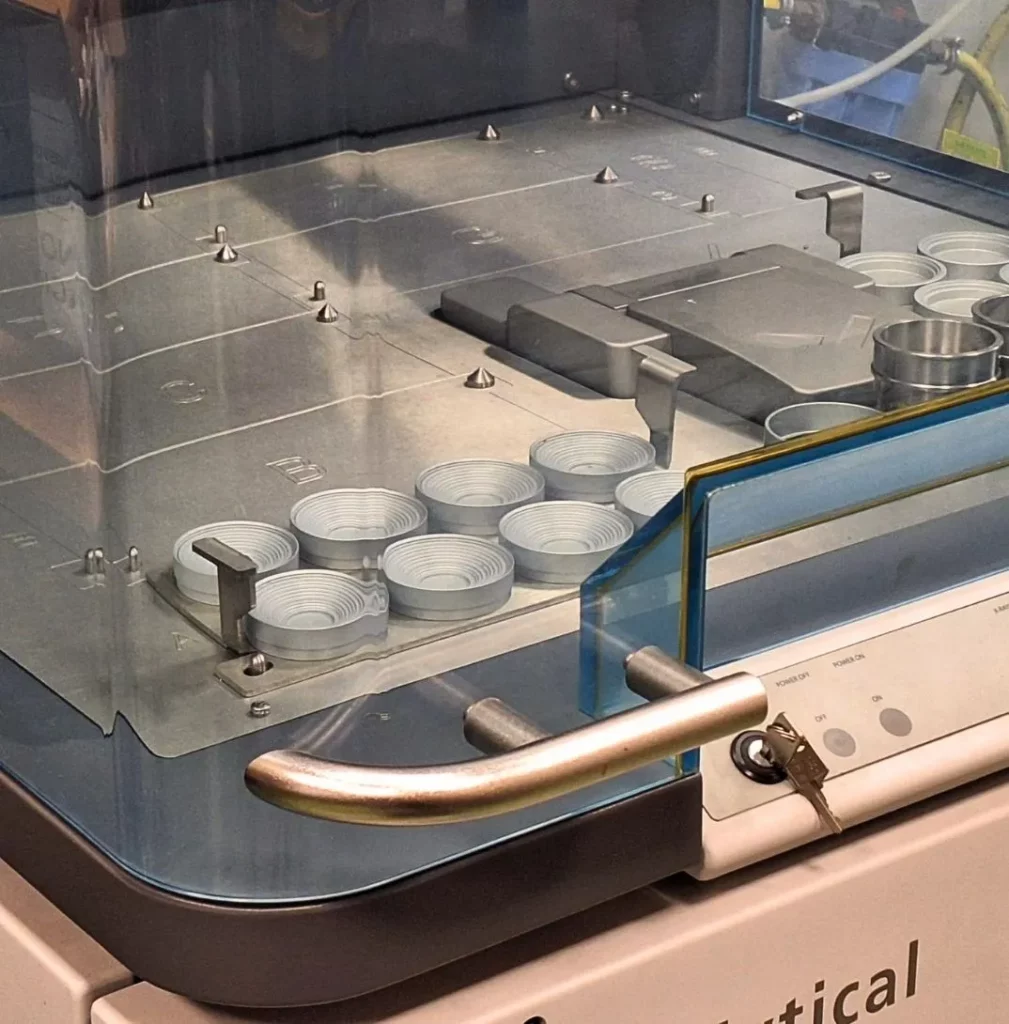
Gas
- Carbon/sulfur determination - ASTM Method E1019, ASTM E1941 (Titanium)
- Nitrogen/oxygen - ASTM Method E1409 (Titanium), ASTM E1019 (Steel-Nickel)
- Hydrogen Determination - ASTM Method E1447 (Titanium)
XRF - Chromatography - Particle Count Analysis
- XRF chemical analysis
- Ion Chromatography - ASTM Method D4327
- Chemical analysis with particle counting SEM-SMART PI
Analysis to determine thermal properties
- LFA thermal diffusivity (> RT) - ASTM Method E1461 (single point)
- Specific heat CP (single point) - ISO Method 11357-4, ASTM E1269
- Thermal Conductivity (>RT)
- CTE (RT to 250 °C) - ASTM Method E228
- CTE (250°C to 1000°C) - ASTM Method E228
- CTE (t < 0°C) - ASTM Method E228

RT static tests.
- Traction at room temperature - ISO method 6892-1
- Traction at room temperature - ASTM Method E8
- RT traction Poisson modulus - ASTM method E8/e8m, ISO 6892-1
- Resilience single test RT - Method ISO 148-1, ASTM E23
- RT Triad Resilience - ISO Method 148-1, ASTM E23
- RT metal compression
- RT streak test (3 tests) - Method EN 10164
- Erichsen Deep Drawing - ISO 20482 Method
- Fracture test on weld - ISO Method 9017
- Flattening/bending test - Method ISO 7438, ASTM E290
- Hydrogen embrittlement (on 4 specimens) - ASTM Method F519


HT static tests
- Hot traction R, RP, A, Z (up to 250°C) - ASTM Method E21, ISO 6892-2
- ET, R, RP, A, Z and Poisson traction (up to 200°C) - ASTM Method E21, ISO 6892-2
- Hot traction R, RP, A, Z (up to 1040°C) - ASTM Method E21, ISO 6892-2
- Stress rupture test up to 700°C prime 50 h - ASTM Method E139, ASTM E292
- Stress rupture test 701°C < T < 1040°C prime 50 h - ASTM Method E139, ASTM E292
- Creep tests for temperatures up to 650°C, duration up to 500 hours
- Creep tests for temperatures above 650°C and up to 950°C, duration up to 500 hours
- Creep tests for temperatures over 950°C, duration up to 500 hours
Static tests LT
- Cold traction R, RP, A, Z (down to -40°C)
- Cold traction R, RP, A, Z with Poisson module (down to -40°C)
- Resilience LT (< to -60°C) single - ISO Method 148-1, ASTM E23
- Resilience LT (-50°C to -60°C) single - ISO Method 148-1, ASTM E23
- LT Resilience (0 to -40°C) Single - ISO Method 148-1, ASTM E23
- Resilience at low temperature (< -60°C) tern - Method ISO 148-1, ASTM E23
- Resilience LT (-50°C to -60°C) triad - ISO Method 148-1, ASTM E23
- Resilience LT (0 to -40°C) tern - Method ISO 148-1, ASTM E23
- Resilience single test RT - Method ISO 148-1, ASTM E23
- RT Triad Resilience - ISO Method 148-1, ASTM E23

Welding mechanical characterization
- Bend test on welded joints - ISO Method 5173, ASTM E190, ASME IX
- Transv. tensile testing on welds - ISO Method 4136, ASME IX
- Bend test on welded joints - ISO Method 5173, ASTM E190, ASME IX
- Spot weld Tensile
- Spot weld Lap shear
- Spot weld Peel test