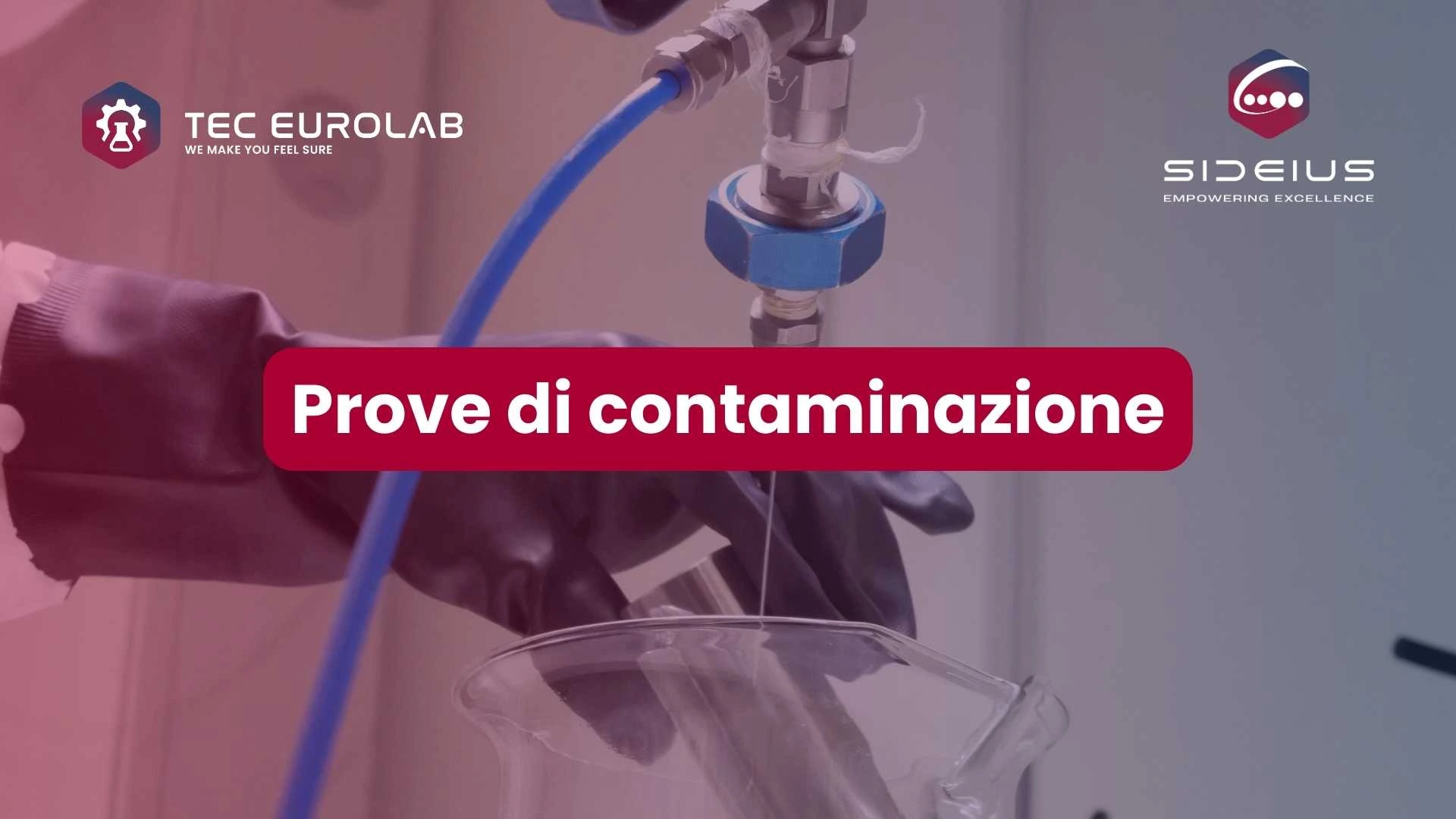
Contamination testing
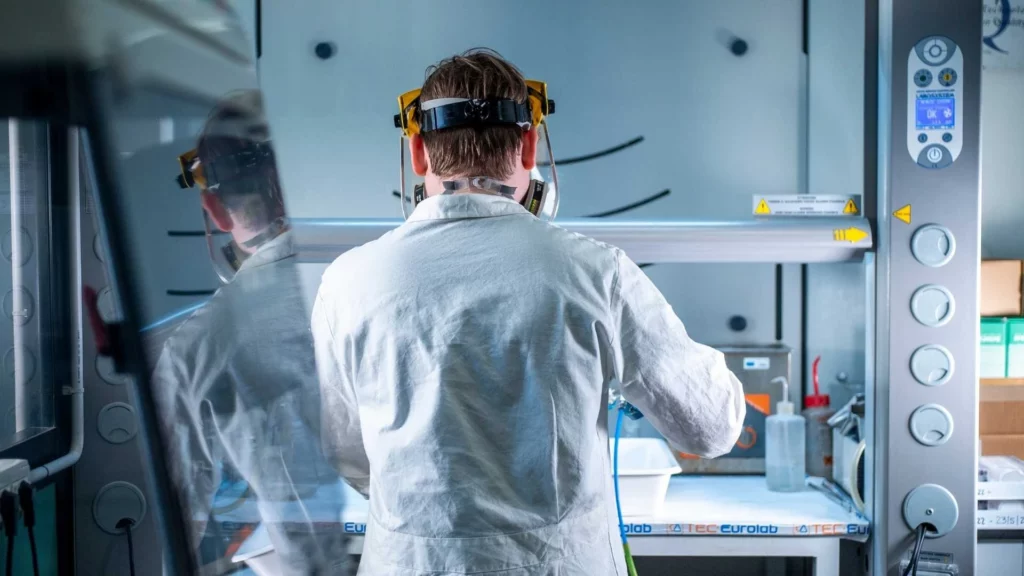
Contamination testing is a fundamental procedure for ensuring the quality of certain mechanical components that must undergo specific cleanliness criteria.
In fact, this type of laboratory test is intended to detect and quantify the presence of foreign particles on the surface of samples, allowing the effectiveness of the washing process to which they have been subjected to be evaluated. Certification of the level of cleanliness is not only a routine practice, but an essential requirement for maintaining competitiveness in the market.
Types of contamination tests
To ensure maximum effectiveness in contamination control, it is essential to know the different types of contamination tests available. Here is a list of the main tests and technical cleanup tests that can be performed:
- Gravimetric test (mass of contaminant collected)
- Search for maximum particles (reflective, nonreflective, fibers) by observation of the contaminant under an optical microscope
- Particle counting of contaminant by light microscope (no. of particles per size range)
- Particle counting and chemical analysis of contaminant by electron microscope (number and chemical type of particles by size range)
- Quantitative determination of the oily residue
The contamination tests in TEC Eurolab
With state-of-the-art expertise and instrumentation, TEC Eurolab is able to perform contamination tests to verify the cleanliness of components. In the next paragraphs we will look specifically at how contamination tests are conducted in our laboratory and what the relevant standards are.
How contamination tests are conducted
At TEC Eurolab we perform contamination testing to determine the presence of residual particles on the surface of the component. This type of destructive testing consists of several steps:
- Wash
The component is rinsed with a solvent to collect particles on the surface. - Filtration and particle collection
The rinsing liquid used in sampling is passed through a filter with a defined pore size. This filter captures all particles larger than the pore size of the filter. The filter is then dried and prepared for further analysis. - Microscopic analysis
The filter is analyzed using an optical or electron microscope. There are two main approaches:- Optical microscopy-The filter is observed under an optical microscope to count particles and determine their size. Particles are classified according to their size (e.g., between 5 and 100 microns) and are quantified.
- Scanning electron microscopy (SEM)-if the chemical composition of particles is needed, the EDX probe in the SEM scanning electron microscope is used.
- Particle counting and classification
Detected particles are counted and classified by size. This step is critical to compare the results with the required cleanliness standards
How to interpret the results
Once the analysis is completed, the data are compared to established standards for the process or industry. According to customer specifications, results must be within acceptable contamination limits to ensure that the component or environment meets cleanliness requirements.
Standards of contamination testing
The main technical standards for contamination testing to which we respond are:
- ISO 4406: Hydraulics – Fluids – Coding method of solid particle contamination level.
- ISO 4405: Oleohydralulics – Fluid contamination – Determination of particulate contamination by the gravimetric method
- ISO 4407: Hydraulics – Fluid contamination – Determination of solid particle contamination by the counting method using an optical microscope
- ISO 16232: Automotive industry – Cleaning of components and systems
- VAD 19: Technical cleanliness inspection – Particulate contamination of functionally relevant automotive components
Machinery, technologies and industries involved
At TEC Eurolab we are equipped with all the necessary instrumentation to carry out technical cleanliness tests, which are essential for the main industrial sectors: automotive, aerospace, hydraulics and in general for the manufacturing industry.
How is a contamination test conducted?