


RTCA DO-160G Test
The categories of testing under the RTCA DO-160G standard.
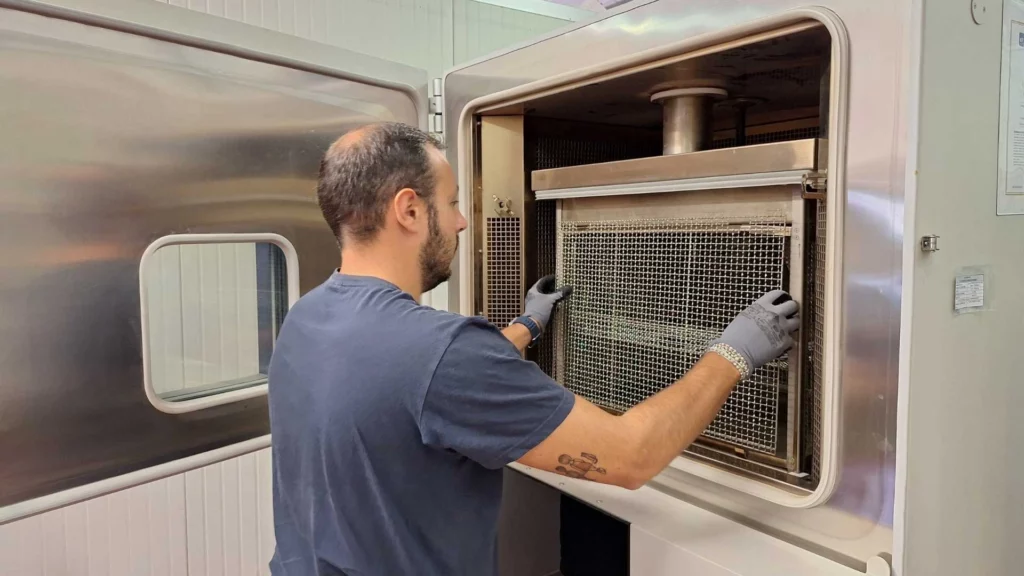
The RTCA DO-160G standard reports numerous types of tests to verify component performance under all possible working conditions. The breadth of the standard allows coverage of all interactions between the component and the environment.
Among the RTCA DO-160G accredited tests our Test Engineering department can perform:
- Temperature Variation (Temperature Variation – Section 5): the component is subjected to thermal shock cycles to test the material’s resistance to rapid temperature changes, simulating the rapid ascent and descent conditions of the aircraft
- Humidity (Humidity – Section 6): assesses the equipment’s ability to resist the effects of atmospheric moisture, preventing corrosion, chemical changes and short circuits due to condensation on electrical and electronic circuits.
- Operational shocks and Crash safety (Operational shocks – Section 7): The test verifies the structural and functional integrity of the system following mechanical impacts (shocks) that may occur during flight maneuvers, taxiing, or landing, ensuring that the unit does not become a projectile in the event of an emergency landing.
- Vibration (Vibration – Section 8): depending on the type of aircraft (turboprop, jet, helicopter) and installation area, the test applies vibration to identify critical resonances and prevent structural fatigue of components
- Fluid Susceptibility (Fluid Susceptibility – Section 11): Tests the resistance of materials to occasional or prolonged contact with contaminating fluids typical of the aviation environment, such as fuels, hydraulic fluids, lubricants, cleaning solvents and de-icing fluids.
- Salt spray (Salt Spray – Section 14): Accelerated corrosion test that exposes the component to a controlled salt atmosphere. It is mandated for equipment operating in coastal or maritime areas and is used to validate the surface protection of metals and coatings.
- Ice (Icing – Section 24): Accelerated corrosion test that exposes the component to a controlled salt atmosphere. It is mandated for equipment operating in coastal or maritime areas and is used to validate the surface protection of metals and coatings.
- Flammability (Flammability – Section 26): Accelerated corrosion test that exposes the component to a controlled salt atmosphere. It is mandated for equipment operating in coastal or maritime areas and is used to validate the surface protection of metals and coatings.
The components tested according to the RTCA DO-160G standard.
Civil and military aircraft components and materials
avionics apparatus and lru
on-board electronic systems
equipment intended for fixed-wing, rotary-wing and uav aircraft
Why RTCA DO-160 qualification is strategic
Compliance with RTCA DO-160 is not only a regulatory requirement, but a critical safety, reliability, and competitive factor for aeronautical products. Properly executed qualification reduces the risk of noncompliance, rework, and delays in certification programs.

Ensure the reliability of your avionics equipment with rtca testing do 160g
The advantages of choosing our laboratory
Our Test Engineering department performs environmental testing according to RTCA DO-160G to support the qualification and certification of avionics equipment, components, and subsystems intended for on-board installation.
Each project is followed with a customized approach to meet the specific needs of the customer:
We support the customer in the study of the standard itself and the test methodologies described.
We perform the tests strictly following the methodologies prescribed by RTCA DO-160G and maintaining direct contact with the customer throughout the project.
We constantly share data and results.
We draft detailed SAL documents and test reports, including all information about the product and how the tests were performed.
We assist the customer in analyzing the final results.
We are committed to providing the highest quality service by:
- Technical expertise: Our team consists of experts with know-how and experience on the RTCA DO-160G standard and its practical applications.
- Advanced Technology: We have modern instrumentation and controlled test environments to ensure accurate and repeatable results.
- Flexibility and speed: We are able to adapt to tight deadlines without compromising service quality.
FAQ - standard rtca do-160g
What is the RTCA DO-160G standard and what is it for?
What types of apparatus must be subjected to RTCA DO-160G testing?
What are the main test sections in the regulations?
The standard includes 26 sections. The main ones include:
- Sections 4-14: Environmental and climatic tests (Temperature, Altitude, Humidity, Salt, Mushroom).
- Sections 15-21: Emission and electromagnetic susceptibility (EMC/EMI) testing.
- Sections 22-23: Direct and indirect lightning (Lightning) tests.
- Sections 7-8: Mechanical Tests (Shock and Vibration).
What is the difference between RTCA DO-160G and ISO 7137?
How long does a full set of lab tests last?
The duration of the testing campaign is highly variable and dependent on the number of tests that must be carried out to verify the part’s compliance with requirements. It can range from a few weeks for simple campaigns, to several months in cases where the tests need to be more detailed and thorough.
What happens if a component fails an environmental test?
In case of component failure, it is often necessary to proceed with an assessment of the reasons for the failure. At SIDEIUS we can support the customer with a failure analysis to identify and study and causes of the problem.