


Welding quality management systems iso 3834
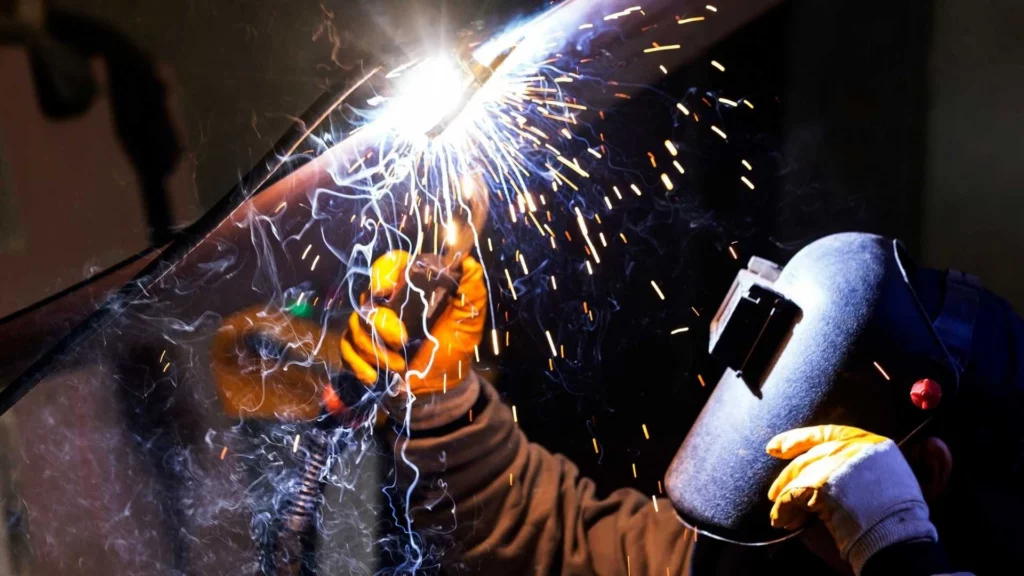
ISO 3834: welding quality system
ISO 3834 welding certification (UNI EN ISO 3834 certification) is the international standard that defines the requirements for a quality management system specifically for welding processes.
Adopting a system compliant with ISO 3834 means demonstrating that the company is capable of producing welds with consistent quality, full traceability, and compliance with applicable standards.
Unlike welder qualification, ISO 3834 certification applies to the entire organization: from technical personnel to materials, from welding procedures to final inspections.
What does ISO 3834 cover?
The ISO 3834 standard defines the requirements that a company must meet to ensure the quality of its welding activities at every stage of the process: from joint preparation to final inspections. It is a structured system that clearly defines responsibilities, personnel competencies, operational procedures, and the checks to be carried out before, during, and after welding.
The standard establishes the criteria for certifying the quality system in the field of welding, a qualification that falls within the broader framework of welding certification (personnel, processes, and systems).
ISO 3834 integrates with other product and personnel certifications in the welding field, depending on the required quality level. With regard to personnel, ISO 3834 certification requires the presence of welders certified according to ISO 9606 and/or ISO 14732, personnel for non-destructive testing certified according to ISO 9712, and a welding coordinator qualified according to ISO 14731.
As for welding processes, the company must hold certification according to ISO 15614.
In summary, ISO 3834 certification creates a coherent system that integrates all these roles and activities, ensuring that every phase of the welding process is managed with a structured approach, traceability, and regulatory compliance.
The parts of the standard and quality levels
ISO 3834-1 - Criteria for selecting the appropriate level of quality requirements.
ISO 3834-2 - Comprehensive quality requirements
ISO 3834-3 - Normal quality requirements.
ISO 3834-4 - Elementary quality requirements
It is designed for simple or low-risk processing, where basic controls and standardized procedures are sufficient.
ISO 3834-5 - Reference documents for the application of quality requirements.
When is ISO 3834 mandatory
ISO 3834 certification can be either a mandatory legal requirement or a voluntary choice for companies that want to demonstrate their ability to manage welding activities in a controlled manner.
It becomes mandatory in all areas where compliance of the welding process is required by specific technical standards or regulations.
Typical examples are:
- Metal construction, where ISO 3834 is an integral part of the 1090 weld certification required to place CE-marked steel or aluminum structural elements on the market;
- Pressure systems and pressure vessels, where the standard is required as a quality assurance of welded joints in accordance with European PED (Pressure Equipment Directive) directives;
- ISO 3834 certification is also often required for on-site welding or in-place welding to ensure process control even outside the shop, in complex environments or with high safety constraints.
In other industries, such as automotive, rail, energy or oil & gas, 3834 welding certification is not formally mandatory, but is often requested by customers in specifications or supply contracts as a company qualification requirement.
In any case, obtaining ISO 3834 certification is a sign of technical competence and reliability, as well as a competitive advantage in accessing higher-level markets and orders.

ISO 3834, ISO 9001 and EN 1090: how they fit together
ISO 3834 certification is not an isolated standard, but integrates seamlessly with other management systems and product standards, creating a comprehensive framework for welding quality and compliance.
In particular, ISO 3834 is complementary to ISO 9001. In fact, while the latter defines the general requirements for an enterprise quality management system, ISO 3834 introduces specific requirements for the welding process, such as personnel qualification, material control and process validation. A company that already has an ISO 9001 system can then easily integrate the requirements of ISO 3834, strengthening control over special processes.
In contrast, with EN 1090, ISO 3834 is mandatory for obtaining certification of CE-marked metal structures. Indeed, 1090 weld certification requires that welding activities be performed in accordance with ISO 3834, as a guarantee that structural joints are made in a compliant and safe manner.
The integration of ISO 3834, ISO 9001 and EN 1090 allows companies to build a robust, internationally recognized management system capable of ensuring quality, traceability and regulatory compliance throughout the production process.
The benefits for companies
Increased access to regulated markets and qualified orders
Fewer defects = lower technical and legal risks
Competitive advantage and greater confidence in the market
Process capability improvement
Development of internal skills and reduction of indirect costs
Fewer audits by contractors

Do you want to certify for ISO 3834 or check if your company is already compliant?
Our help in getting the certification
Sideius, through its Valor brand, operates as an accredited Certification Body and issues ISO 3834 certification, following a structured process that guarantees independence, transparency and consistency with the requirements of the standard.
After submitting the application for certification and completing the Preliminary Information Form, in the head of the applicant, the Sideius Certification Body assigns a qualified auditor to evaluate the Welding Management System. This is followed by two audits:
- Stage 1 Audit: Through Document Review, the documentation of the welding management system is evaluated, with particular attention to the organizational structure, procedures and applicable processes. The auditor prepares a document review report, which may include any findings to be addressed prior to the field audit
- Stage 2 Audit: through Field Verification, compliance with the requirements of ISO 3834 is assessed directly at the applicant’s site. This audit verifies operational evidence, traceability of activities, and management of qualifications and controls
If all the requirements are met, Sideius, through the Valor brand, issues the ISO 3834 certificate.
The activity continues with periodic surveillance audits to confirm the maintenance of the certification over time.
This process helps ensure that the certification is issued objectively, based on verifiable evidence, and complies with the accreditation standards set by ACCREDIA.
FAQ - 3834 welding quality management system certification
What is ISO 3834?
ISO 3834 is the international standard that defines requirements for quality management in welding processes. It serves to ensure that welds are performed in a controlled, safe manner and in accordance with applicable technical standards.
What are the different levels of ISO 3834?
The standard provides three levels of quality:
- ISO 3834-2 – comprehensive quality requirements, for critical or structural manufacturing;
- ISO 3834-3 – normal quality requirements, for medium complexity welds;
- ISO 3834-4 – elementary quality requirements, for simple or low-risk processing.
Is it mandatory for all companies?
How long does the certification take?
ISO 3834 certification is valid for three years, with annual surveillance audits to ensure that requirements are maintained and the system is continuously updated. After 3 years, certification must be renewed: renewal involves repeating the initial certification process.
What benefits does it bring?
How does it relate to ISO 9001 or EN 1090?
ISO 3834 complements ISO 9001 by adding specific requirements for welding within the company’s quality system. It is also mandatory for EN 1090 certification, which governs the CE marking of metal structures.
Do you want to certify your welding quality management system with ISO3834?
Contact us for more information