



Wear of a blade
The object
One of the phenomena that leads to a component no longer being usable for its purpose even without being broken is wear and tear, or the “consumption” of material resulting from repeated and continuous rubbing against a surface. Comparison of a new and a used razor blade reveals interesting information about the “mode of degradation” of an everyday object.
The analyses
Chemical analysis
The material constituting the cutting edge is classifiable as martensitic stainless steel type X46Cr13 (UNI EN 10088).
Examination by electron microscopy and X-ray microanalysis
A new blade presents itself as can be seen in micrographs No. 1 and No. 2, relating to the cutting edge: firstly, the presence towards the edge of a darker layer, an indication of the presence of a coating, can be observed; furthermore, the profile of the edge is linear, without microimperfections.
Micrographs No. 3 and No. 4 were taken on the first blade of the used razor blade. Uniform coloration, an indication of probable detachment or absence of coating, and a very uneven edge is detected.
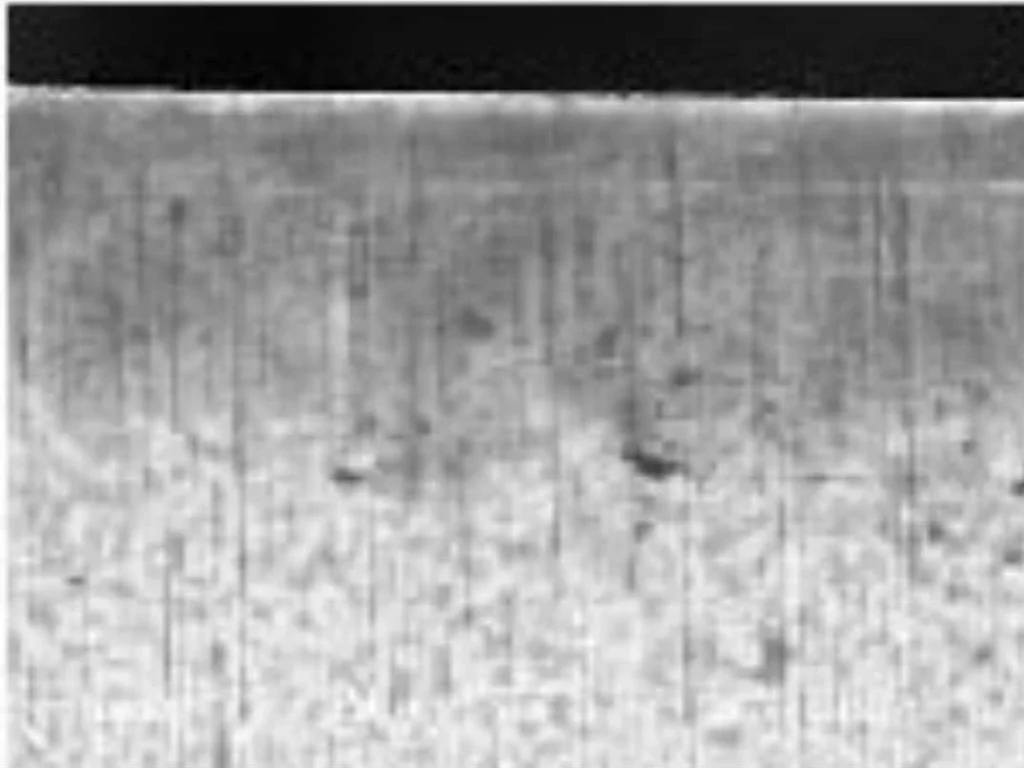
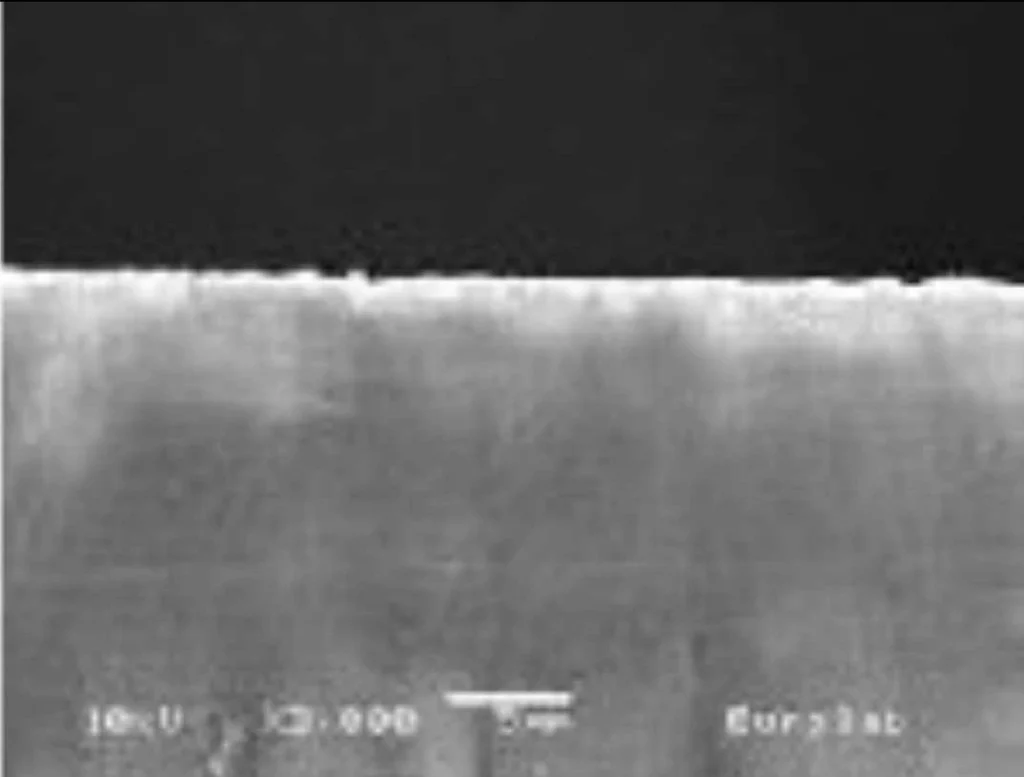
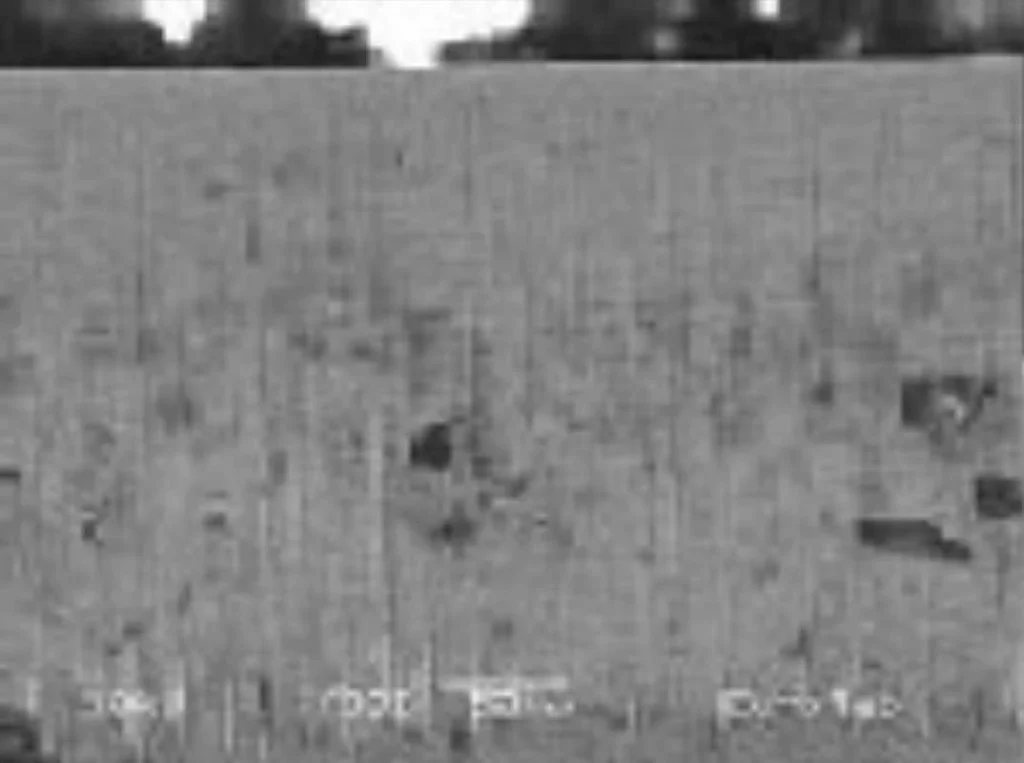
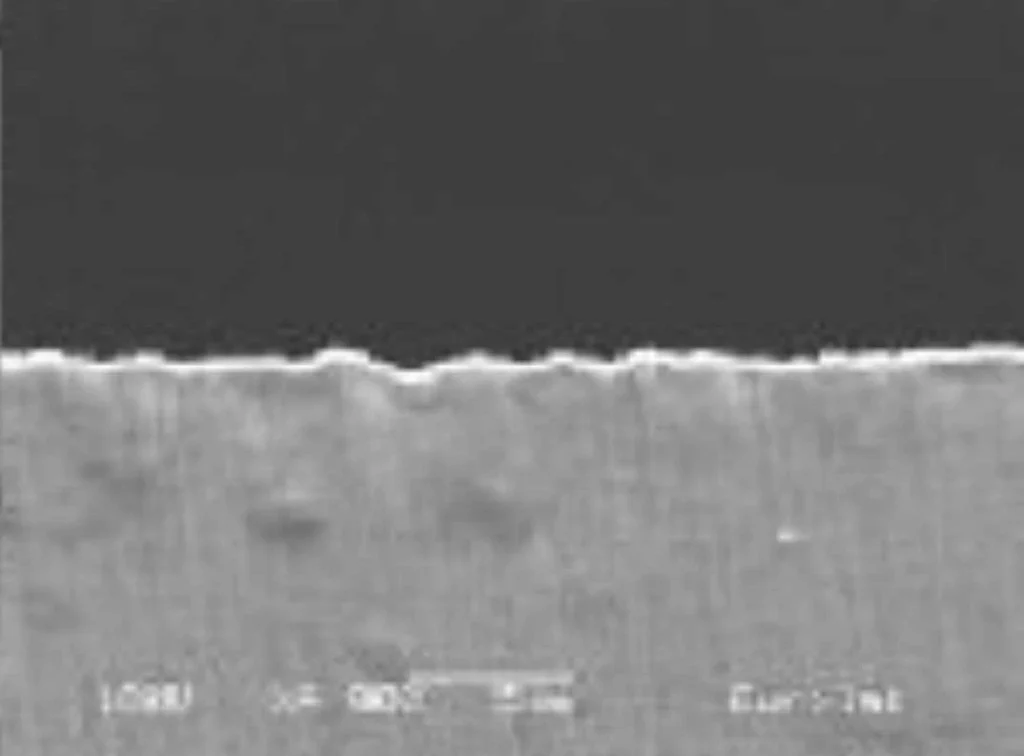
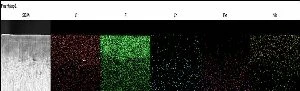
The map in Figure 5 shows how near the cutting edge of the intact blade, there is a concertation of C and Nb absent on the other blade.
Metallographic examination
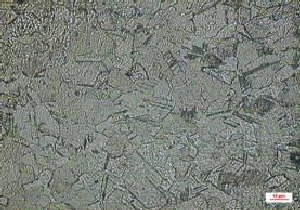
The metallographic structure of the support of the is typical of a ferritic stainless steel (fig. 6)
Micrograph / Micrograph: 6
Attachment / Etching: Acqua Regia
Magnification / Magnification: 800X
Sample / Sample:NEW BLADE
Position / Position: Heart
Section / Section: Transverse
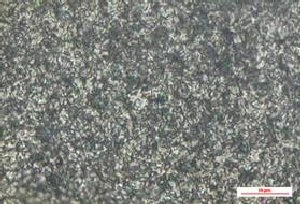
The metallographic structure of the blades’ cutting edge is typical of a martensitic stainless steel (fig. 7)
Micrograph / Micrograph: 7
Attachment / Etching: Acqua Regia
Magnification / Magnification: 2000X
Sample / Sample: NEW BLADE
Position / Position: Heart
Section / Section: Transverse
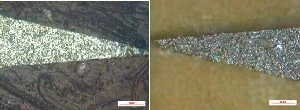
An anti-wear coating of 0.5 µm thickness is detected on the surface of the new blade throughout (fig.8), while on the surface of the worn blade there is an absence of the coating and signs of scuffing (fig. 9)
Hardness
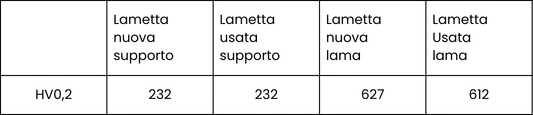
As can be seen in the table, the backing and blade hardness values of the new and used razor blades are essentially the same. In fact, the real difference between the two lies in the fact that coating deterioration occurred in the second one.
Discussion
On the cutting edge of the blades of a new razor blade is a coating of NbC, obtained through a chemical deposition process and characterized by high hardness and wear resistance.
In the course of use, the coating is progressively removed and deterioration of the cutting edge begins, which comes to assume a highly irregular profile. Logically, greater wear is observed at the points where the coating has become detached.
Conclusions
The loss of efficiency of a razor blade is identifiable as a wear phenomenon borne by the niobium carbide coating of the cutting edge and then by the martensitic stainless steel cutting edge itself.
This is most likely of interest relatively to the user, that is, the one who shaves daily, while it is of considerable importance to the manufacturer, presumably seeking an ever-better compromise between cost, efficiency, and durability, taking care that, in the circumstance, the latter is long enough, but not too long…
Has your component worn out? Let’s find out why together
Request information