



Failure Analysis on Exhaust Valve
The object
A mushroom drain valve is a type of valve used to control and regulate the flow of fluids in a system. Its structure resembles that of an inverted mushroom, with a cylindrical body and a dome-shaped upper section. The top section, called the “mushroom cap,” is connected to a rod that, when actuated, raises or lowers the cap to open or close the fluid passage.
These valves are commonly used in various industries, such as petrochemical, water treatment, food processing, and many other applications that require fluid flow control.
However, like any mechanical component, mushroom drain valves are subject to possible failure modes. Some of the main causes of failure may include:
- Blockage or obstruction | Various factors, such as sediment, particles or impurities in the fluid, can accumulate in the valve seat or mushroom cap stem, causing blockage of movement and preventing proper operation.
- Wear and corrosion | Wear of contact surfaces and corrosion can impair valve sealing, leading to unwanted leakage and inadequate flow control.
- Rod breakage | The rod that raises and lowers the mushroom cap may break due to excessive strain, poor quality materials, or manufacturing defects.
- Control system malfunction | In the case of automated valves, the electronic or pneumatic control system may fail, leading to improper valve operation.
- Mechanical damage | Any shocks or physical impacts can cause damage to the valve structure, impairing its integrity and operation.
- Sealing problems | Insufficient sealing between the cap and valve body can cause leakage and affect flow regulation.
To avoid such failures, it is essential to perform regular inspections, preventive maintenance, and use high-quality materials suitable for the specific application. Proper training of personnel on the proper use of valves and proper fluid handling also help to prevent accidents and ensure safe and efficient operation of mushroom drain valves.
Purpose of the survey
The purpose of the investigation and damage analysis of the sample identified as “EXHAUST VALVE.” Analyses are performed to characterize the material and identify the mode of failure, speculating on possible causes. The only information available concerns the conditions under which the damage occurred, while the sample was in use.
The analyses
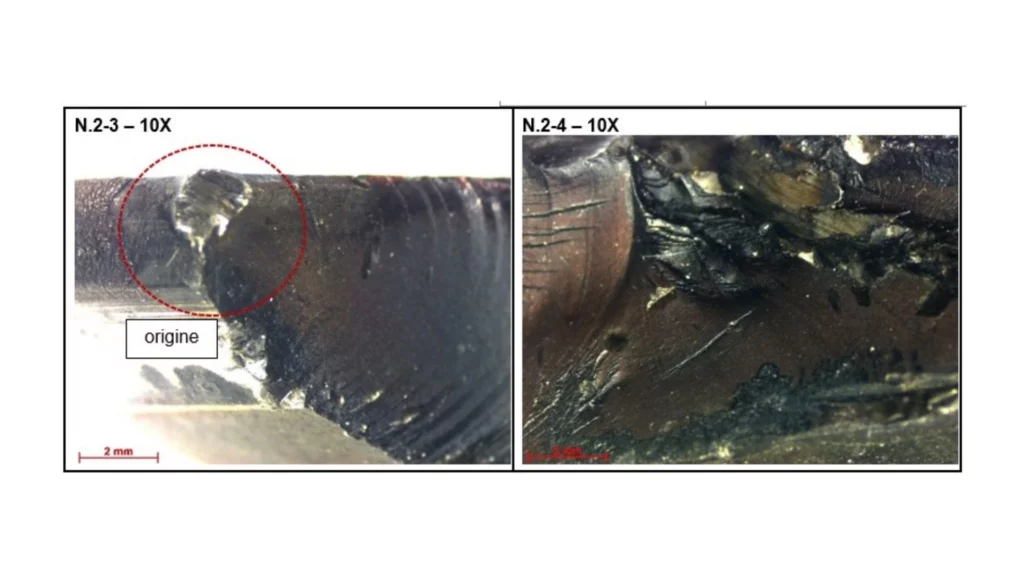
The sample was subjected to several analyses to understand the damage that had occurred. Initially, a visual examination revealed the breakage of a portion of the mushroom.
The rupture surface showed generalized surface contamination/oxidation, probably due to the operating conditions of the valve in contact with combustion gases. There were also signs of propagation of a fatigue mechanism.
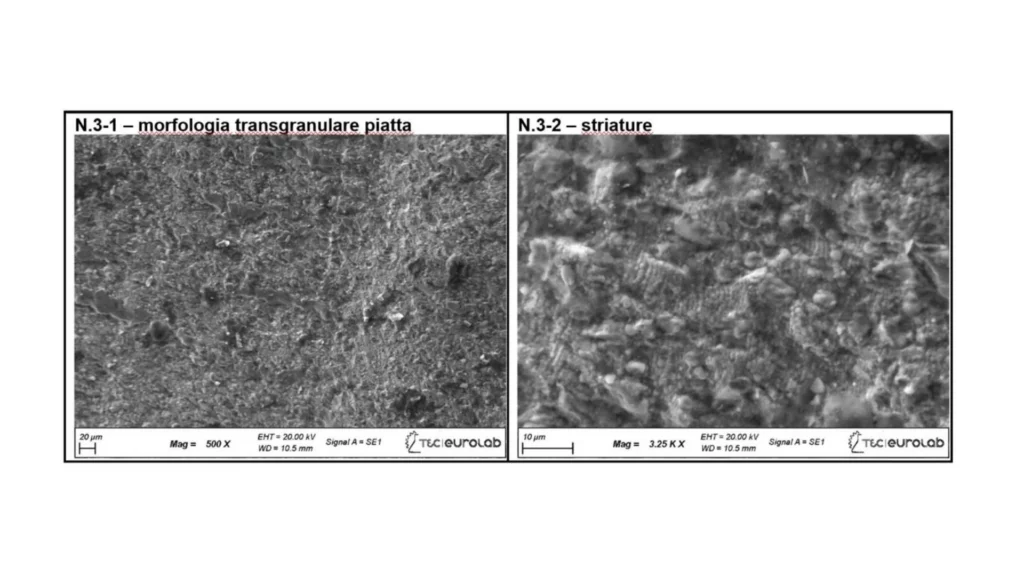
Subsequently, fractographic analysis by electron microscopy confirmed a flat transgranular type fracture with striations, typical of a fatigue fracture. The presence of exogenous substances, such as sulfur and phosphorus, related to the operating atmosphere, was observed on the failure surface by EDS analysis. In addition, a micrographic examination showed a smooth and flat rupture surface, also crossing the carryover present on the outer circumference. No defects or anomalies correlated with the rupture were detected. Chemical analysis classified the sample material as an austenitic stainless valve steel according to UN IEN 10090. Micrographic analysis confirmed the presence of a hot-applied coating with a dendritic microstructure, while the microstructure of the base material showed a dispersion of carbides, nitrides, and carbonitrides in an austenitic metal matrix, typical of a precipitation-hardening austenitic stainless steel. The coating was identified as a cobalt-chromium alloy of the “stellite type.”



The results
- he sample is free of microstructural defects, with a hardness of 313 HV for the base material and 534 HV for the coating.
- The rupture was confirmed as a fatigue propagation originating in the circumferential outer surface of the mushroom, but no signs of initiation of the fatigue mechanism were found.
- Despite some limitations in the origin analysis due to crushing and secondary damage, all analyses agree on the origin of failure by fatigue propagation without major local defects or anomalies.
Conclusions
The sample analyzed has no metallurgical defects or anomalies, although the applicable quality requirements are unknown. The materials used, their characteristics and conformation are typical for this type of product.
Failure was caused by fatigue, which for this type of product is often associated with defective local conditions or operation under very severe conditions, especially at high temperatures, that significantly affect fatigue strength properties.
Is your component damaged? Let’s find out together why
Request information